Showing posts with label haiku. Show all posts

Friday, July 6, 2018

Two Original Beetle Poems

Today, I have two beetle poems for you. The first is a haiku; the second is a mask poem.


Beetle on a rose

in shining armor…ready

to battle sharp thorns


My love is this beautiful red, red rose.

Of all the blossoms, it’s the one I chose.

It has silky petals, leaves of emerald green.

It’s the yummiest flower that I’ve ever seen.

 ********************


Tricia has the Poetry Friday Roundup at The Miss Rumphius Effect.

Friday, August 21, 2015

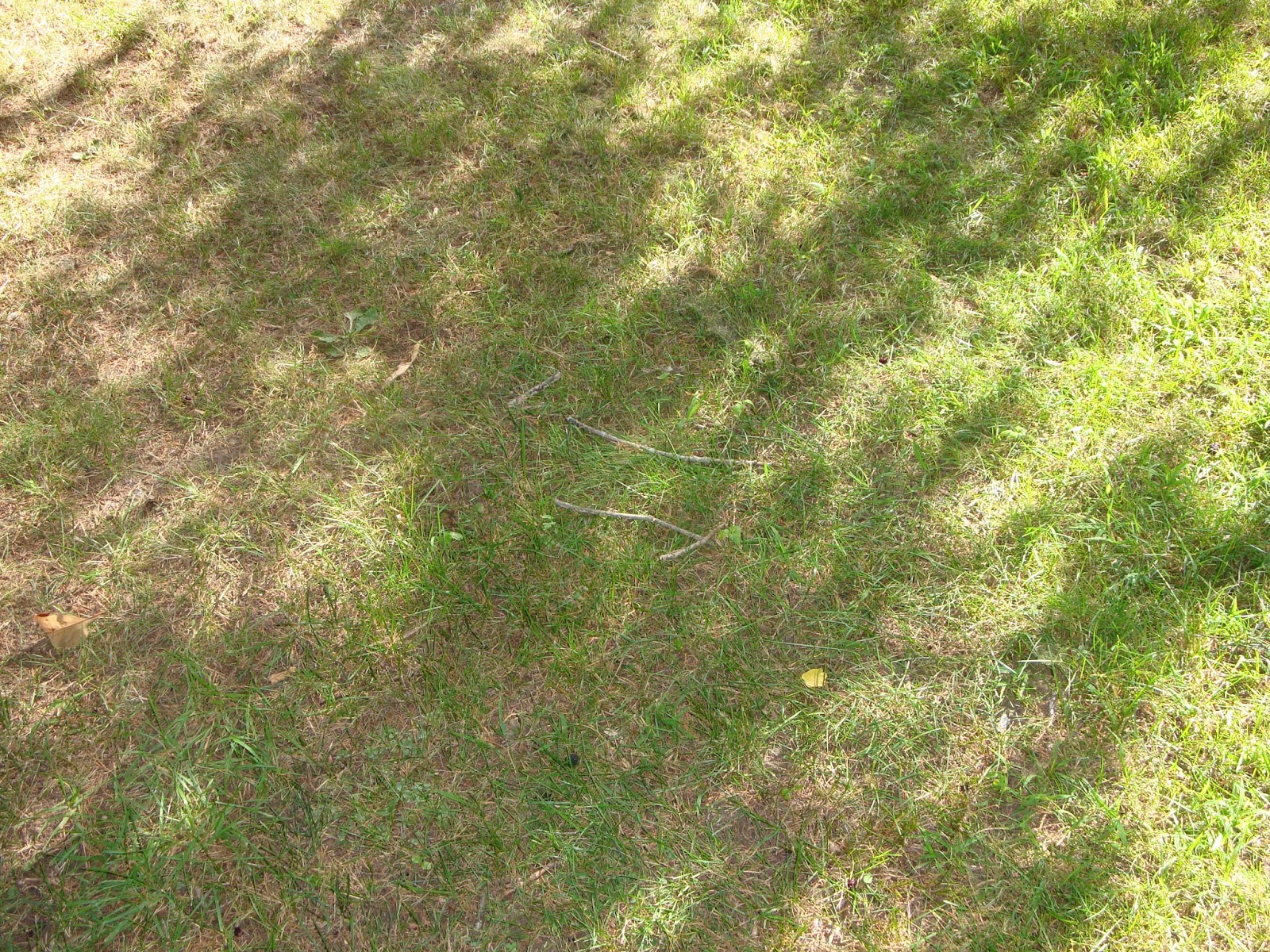
SHADE: Two Short Poems and a Picture


Sorry that I wasn't able to post last Friday. I have been having major problems with Internet connectivity--even after someone from Comcast came out to fix things. After that, things were fine...for five days. Then last Friday I couldn't connect at all. It appears that we finally have the problem solved--but I'm keeping my fingers crossed!

Last Sunday, I was able to post three back-to-school list poems on my husband's laptop. Click here to read them.

Today, I have a photograph, a thirteen-syllable haiku, and a riddle rhyme for you.


treetops
bathing in sunlight
showering shade below


**********


Beneath the trees
Where I am laid--
A lace of darkness.
I am _ _ _ _ _.


**********


Catherine has the Poetry Friday Roundup at Reading to the Core.


Friday, October 21, 2011

HALLOWEEN HAIKU


I was sitting at my computer yesterday thinking about Halloween. My daughter Sara used to get so excited about Halloween when she was little. She always loved spooky stories and movies. She'd start decorating the house for the holiday in early October. I had so much fun watching Sara enjoying herself getting the house ready for the "big night."

Well, Sara is still into Halloween even though she's an adult--and a mother now. Her own home is decorated with Halloween lights, ceramic pumpins, and jack-o-lanterns. I got an idea while I was sitting at my computer yesterday morning. I thought I'd try writing some Halloween haiku--just for fun. Here are some of the "still-in-progress" haikus that I wrote:


Peaked hat piercing clouds
She zooms on a bristled broom
Brushes the sky black


(Picture by Alvina Ling)

Pumpkin heads staring
From doorsteps, their crooked smiles
Flickering with fire


Who haunts this house? Whose
Spirit lingers and won’t leave?
Who-o-o-o...Who-o-o-o haunts this house?


Nothing but bones, it
Clicks and clacks and clatters its
Way through Halloween


********************

Jama Rattigan has the Poetry Friday Roundup at Alphabet Soup.

Friday, April 24, 2009

Poetry Friday: Animal Haiku


The Cuckoo’s Haiku and Other Birding Poems
Written by Michael J. Rosen
Illustrated by Stan Fellows
Candlewick, 2009


The Cuckoo’s Haiku is truly one of the finest books of haiku for children that I have ever read. It’s a wonderful amalgam of lovely haiku about birds, exquisite realistic watercolor paintings showing the different birds in their natural settings, and factual information about the avian creatures in the back matter of the book.

The book is thoughtfully organized by season. The Spring Section includes haiku about the Eastern Bluebird, Canada Goose, American Goldfinch, Northern cardinal, American Crow, Ruby-throated Hummingbird, and Mourning dove. The Summer Section includes poems about the Chimney Swift, Belted Kingfisher, Barred Owl, Great Blue Heron, Pileated Woodpecker, Northern Mockingbird, and Common Grackle. The Autumn Section includes poems about the Cedar Waxwing, White-breasted Nuthatch, European Starling, American Robin, and Black-billed Cuckoo. The Winter Section has poems about the Dark-eyed Junco, Wild Turkey, Blue Jay, House Sparrow, and Purple Finch.

Here’s a haiku about the Black-billed Cuckoo from the book:


the cuckoo’s haiku
hidden like the chance of rain
its name, repeating


There’s no point in my writing a more extensive review of this book because Jules of 7-Imp has already written the definitive post about it. Her review includes lots of background information from the author—as well as some of the book’s beautiful illustrations. Here’s the link: Poetry Friday and Michael J. Rosen: Haiku is for the Birds.


If Not for the Cat
Written by Jack Prelutsky
Illustrated by Ted Rand
Greenwillow, 2004


If Not for the Cat is definitely a great departure from the books of rhythmic, rhyming, humorous poems for which Jack Prelutsky has become so famous. Prelutsky proves himself adept at penning this traditional form of Japanese poetry. He writes his haiku about a variety of animals—including jellyfish, a sea otter, a rattlesnake, ants, and a kangaroo. I should note that these seventeen poems do not adhere to all of the essential elements one would expect to find in the classical form of haiku. There are no “season” words. Another thing: Prelutsky’s haiku could also be considered “mask” poems because the animals speak out to us from the pages of this beautifully illustrated picture book in their own voices.

Here is a haiku told in the voice of a hummingbird:


I, the hoverer,
Sip the nasturtium’s nectar
And sing with my wings.


Here’s a link to another poem from the book.


Ted Rand’s spare, elegant illustrations are the perfect complement for the haiku poems in this book. This is a truly lovely collection of pictures and poetry!

You can read a brief description of If Not for the Cat at this link: Horn Book Fanfare—Best Books of 2004.


Least Things: Poems About Small Natures
Written by Jane Yolen
Photographs by Jason Stemple
Wordsong/Boyds Mills Press, 2003


Least Things is a book of fourteen haiku about smaller creatures with whom most of us are familiar—snail, crab, caterpillar, butterfly, chipmunk, grasshopper, squirrel, dragonfly, spider, lizard, hummingbird, turtle, tree frog—and a human baby. Yolen writes her poems using the traditional 5/7/5 syllabic format. Close-up photographs of the “least things” showing them in their natural habitats serve as the backdrops for the poems, which--like the haiku in If Not for the Cat—are written in the voices of the different creatures.


CRAB

A quick sideways glance,
A brief soft-shoe over sand.
I scuttle away.

Each two-page spread in the book includes a haiku and a small bit of factual information about the animal written about in the poem. Yolen wrote the poems for her son Jason’s photographs. There is, therefore, a true marriage of text and illustration. This is a good book to include in a classroom library collection.

Classroom Connection
An elementary teacher could use Least Things as a springboard for a creative writing/cross curricular activity in the classroom. It might be fun for a teacher to gather some color photographs of insects and other small animals and have students write haiku about them. Children could also do a little research and write short paragraphs of information about the animals--just as Yolen did in her book. The students could then illustrate their poems. The photographs, drawings, haiku, and informational paragraphs could be mounted on construction paper and posted on a bulletin board. Wouldn't that make for a wonderful display of student writing and artwork?


Dogku
Written by Andrew Clements
Illustrated by Tim Bowers
Simon & Schuster, 2007

Dogku is certainly not your typical book of haiku for children. Told through a series of seventeen haiku, this is a light-hearted tale of a stray dog that appears at the door of a family with three children one day. The children name the dog Mooch before they head off for school that morning. While the children are away, Mooch has some adventures and gets into some mischief. He goes for a ride in the car with the window open; he rolls around in the trash; he chews on dirty socks he finds in the laundry basket; and he takes a nap outside on the stoop.

Later that day, a decision must be made by the parents. Will they agree to keep the stray as a family pet—or will they take him to the pound? What will happen? Fortunately for Mooch and the three children, the homeless dog finds a home. Young readers are sure to enjoy this doggy tale with a happy ending.


A new doggy bed!
Food, a bowl, a squeaky toy!
Mooch has found his home.


Tim Bowers' illustrations done in oil paint add to the charm and levity of this endearing haiku story.


********************

Wednesday, September 10, 2008

The Ride Haiku Contest

The Chicago Sun-Times

The Ride Haiku Contest
By Mary Wisniewski on September 8, 2008 1:00 AM

Quoting from the online post:

“You remember the haiku from high school literature class, right? It's a form of Japanese poetry with five syllables in the first line, seven in the second, and five in the third. It's short and sharp, and we need some about our commute. Planes, trains, buses, bikes, automobiles and walking are all good subjects.”

The paper will run the best ones in the Monday Ride column.


Click here to read some “ride haiku” examples.

Friday, August 8, 2008

Poetry Friday: Summer Haiku

I haven’t been posting much lately at Wild Rose Reader. My attentions have turned to other things in recent weeks--doing research for and writing a new collection of poems, cleaning out my basement and closets, and working on plans for the 45th reunion of my high school class and for our reading council’s 2008-2009 Speaker Series.

This morning I went looking for some drafts of summer haiku poems that I could post today. These are not polished haiku--but I HAD to post on Poetry Friday! By the way, our weather here in Massachusetts has been horrible this summer--damp, gray, cool, rainy. The forecast is for more of the same today. So…with this weather in mind, I wrote the first haiku a few minutes ago.


This August day
Sun has hobbled away
Sky seems old and gray

Luna moth
flutters around our porch light
thinking it’s the moon

Moths cling to our
kitchen screen, sunbathing on
a summer evening


Wafting into air,
campfire sparks…lightning bugs
dancing in the dark


Barefoot in dewy
grass, my toes drink the nectar
of a summer night


********************


At Blue Rose Girls, I have a poem entitled A. M. Fog by Mark Jarman.

The Poetry Friday Roundup is at Becky’s Book Reviews.

********************

Friday, May 23, 2008

Yuki and the One Thousand Carriers: A Book Review


Here’s my review of a picture book--with poetry--that I recommend for reading to children during Asian Pacific Heritage Month.

(Note: Click here to find some book lists and other resources for Asian Pacific Heritage Month.)


YUKI AND THE ONE THOUSAND CARRIERS
Written by Gloria Whelan
Illustrated by Yan Nascimbene
Sleeping Bear Press, 2008


Yuki and the One Thousand Carriers is a work of historical fiction. In the Author’s Note, Gloria Whelan informs readers that she was inspired to write the book after viewing an exhibition of a series of woodcuts, “The Fifty-three Stations of the Tokaido Road,” done by the nineteenth-century Japanese artist Utagawa Hiroshige. She goes on to explain that in the 17th and 18th centuries, “provincial governors of Japan were required to spend half of their time in Kyoto, the home of the emperor and the imperial court, and half of their time in Edo (today’s Tokyo), Japan’s political center, ruled by the shogun.” The road these provincial governors and their families traveled between the two cities stretched for 300 miles over mountains and along the sea.

This picture book is narrated by Yuki, a young girl who must travel to Edo when her father is summoned by the shogun. Yuki is hesitant to leave home. Her teacher is frustrated that she will miss many lessons while she is on the weeks-long journey. Her teacher tells Yuki to write a haiku every day while she is traveling to the distant city.

It is evident from the text that Yuki is a child of privilege. Yuki relates how she packs up “twenty of my favorite umbrellas, fifty of my best kimonos, and all my fans.” Yuki and her mother will be transported to their destination in a palanquin, a wooden box outfitted with silk cushions, carried by six men.

In the palanquin, Yuki and her mother are part of a long procession that includes shouters who tell everyone to lie down and bow as the governor passes, samurai, Yuki’s father, and a long line of carriers burdened under the weight of their cargo.

Yuki writes her first haiku when she reaches the gate of their city:


Once outside the gate
How will I find my way back?
Will home disappear?


The first night, as the party arrives at an inn, Yuki’s mother informs her that their journey will not be over until they have spent the night at 53 inns. At this point Yuki’s thoughts turn to her bed back at home--a bed that “lies empty/just waiting for me.”

The next day, as the travelers reach a river, “a blue ribbon we have to cross,” Yuki writes:


River is busy
making its own journey;
it doesn’t look back


Although Yuki thinks of home, she observes many things along the way to Edo through the opened shutters of her palanquin: the river they have crossed, narrow mountain paths they must traverse, snow-covered trees, wild animals, a village tucked into a mountain valley, fishing boats in the sea, and Mount Fuji. Yuki heeds the words of her honorable teacher. She writes about the things she sees and about what she is thinking in her daily haiku. Readers experience the trip along with Yuki in both the story narration and in the haiku.

When the procession arrives at its final destination, Yuki finds a city filled with people and many houses. She says sayonara to their one thousand carriers, and writes a haiku that shows us that she is not longing to return home any more:


Everywhere I see
something to delight my eyes
I stop looking back


Yuki and the One Thousand Carriers is a quiet book that takes readers on a journey through historic Japan in text and pictures. Nascimbene’s large one-and-a-half page spreads are spare and elegant and a perfect complement to Whelan’s text. They capture the beauty of the different landscapes, the height of the majestic mountains, and the Japanese architecture, with muted colors. In most close-ups of Yuki, however, we see her wearing brightly colored, patterned kimonos.

Yuki and the One Thousand Carriers would be a good book to use across the curriculum in a multicultural unit--especially during Asian Pacific Heritage Month. It could also serve as an excellent introduction to or inspiration for a haiku-writing activity in the classroom.
*************************
At Blue Rose Girls, I have selected a poem especially for Memorial Day--Dulce et Decorum Est by Wilfred Owen.

The Poetry Friday Roundup is at Becky’s Book Reviews.


Thursday, April 3, 2008

Haiku: One Breath Poetry

Here are some haiku poems written by a class of fourth graders that I worked with during the winter of 2003. The classroom teacher had shared many haiku in class over the course of three or four weeks before bringing her students to the library for a haiku-writing session with me. In the library, I shared more haiku with the students. We discussed haiku and talked about trying to capture a moment with words. Then we wrote a collaborative class poem after looking at a picture of a a cardinal sitting in a tree in the winter. (I'm sorry that I don't have a copy of the picture to post along with the poem.) After that writing exercise in the library, I followed up with two more writing sessions in the classroom. During those two periods, I worked individually with all the children as they wrote their own haiku.

A Collaborative Class Haiku
by the Students of Ms. Erikson's Fourth Grade (2002-2003)

A cardinal perches

On the snow-covered branch...

A winter cherry!


WINTER HAIKU


Drip, drop. Drip, drop. PLOP!!!
The icicles are weeping.
I wonder why they cry.

by Zachary


Floating from the sky,
Perching on branches
Fluffy white birds...snowflakes!

by Paige


Snow falls on distant hills
Covers the world
In a blanket of white powder.

by Seth


Icicles drip, drip
From the roof,
Leaving their fingerprints in the snow.

by Niki


A BEAR

Snow flutters to the ground.
A bear is covered
with a white blanket.

by Sophie


END OF WINTER

At night in the forest
A wolf howls
Saying goodbye to winter

by Rebecca


Icicles melt.
Water splashes to the ground...
The roof is raining!

by Ben


The mountains clothed
with white robes standing tall in the sun
reaching for the sky

by Alex


Autumn leaves cover the ground.
The first snowflake of winter
Lands on my nose.

by Grace


The silent wind flies
Through the forest. Trees shiver,
Shaking down starry white crystals.

by Brian


Icicles hang from the roof
Sparkling, crystal chandelier
Reflecting the sunlight.

by Emily


Mother Cloud
Covers her baby, Earth,
With a blanket of snow.

by Griffin


FLUFFY SNOW

Fluffy snowflakes fall
Whirling wind sweeps them
Down the road

by Samir


STARTING WINTER

Snowflakes drifting from the sky,
landing on tree tops...
little white butterflies

by Sean


SNOWFLAKES

Snowflakes floating down,
Each one's different...cold stars
Falling from the sky!

by Katie


TREES: GIANT ICE STALAGMITES

Snowflakes fall on pine trees
Sparkle on the branches...
Diamonds of ice.

by Daniel


Crawling through the snow
flakes fall on my tongue
melting like magic.

by Dylan


On a snowy hilltop
An icy castle shivers
In the cold

by Isabella


I watch snow falling.
Outside a blue jay perches
On my window sill.

by Ryan


From tree branches icicles hang...
crystal cones glistening
with diamonds of sun

by Charlotte

Wednesday, April 25, 2007

A Poem a Day #25

My haiku today is for Bruce at Wordswimmer. Bruce served on the Cybils poetry-nominating panel with me. He always had thoughtful and perceptive comments to add to our group’s discussions about the poetry books we were evaluating. Bruce writes a lot about the writing process at his blog.


BEETLE
by Elaine Magliaro

Beetle on a rose
in shining armor…ready
to battle the thorns

Friday, April 13, 2007

A Poem a Day #13

My haikus today were written for Cloudscome at A Wrung Sponge. Cloudscome has posted more than fifty original haiku poems at her blog. She writes her poems to accompany photographs she takes of flowers in her garden, of blossoming cherry trees, of a children’s book worn by loving hands, of a tricycle outside in the yard, of a monarch butterfly looking for nectar. Both her poems and her photographs are exceptional in their beauty.

I was inspired to write my haiku poems in response to some of Cloudscome’s lovely photographs. Cloudscome, thanks so much for the fine poetry you have brought to the world of kidlit bloggers. (Photographs used with permission of Cloudscome.)


HAIKU GARDEN

Look! A starting line
of crocuses ready
to sprint into spring

Sun rubs resting earth
with warm yellow hands…coaxes
forth petals of gold

Celebrating spring
cherry trees don party clothes…
look pretty in pink!

On petal wings,
monarch floats in air…like a
blossom in the breeze

Black-eyed-Susans
sunbathing in summer
staring at the sky


FOR TEACHERS
Check out the following website:

In the Moonlight A Worm

Quoting from the website: “This website offers teachers and students an introduction to writing haiku poems, a chance to study the history and nature of haiku poetry and an introduction to the fundamental principles of creative writing.” The website is supported by the National Lottery through the Arts Council of England.


BOOK RECOMMENDATIONS


CRICKET NEVER DOES: A COLLECTION OF HAIKU AND TANKA
Written by Myra Cohn Livingston
Illustrations by Kees de Kiefte
Margaret k. McElderry
1997


This collection of poems written by Myra Cohn Livingston, a recipient of the NCTE Award for Excellence in Poetry for Children, has a variety of haiku for each season of the year. The book is now out of print—but used copies can be purchased from online booksellers.


HAIKU: ONE BREATH POETRY
Written & illustrated by Naomi Wakan
Heian
First American Edition 1997

This is a good resource book for teachers or anyone who is interested in the haiku and its history. It includes sections on Japanese Haiku and Haiku in English.

AT BLUE ROSE GIRLS
Check out my Poetry Friday Potpourri #2 post at Blue Rose Girls. I have The Joy of Writing, a poem written by Nobel Prize winning poet, Wislawa Szymborska.